

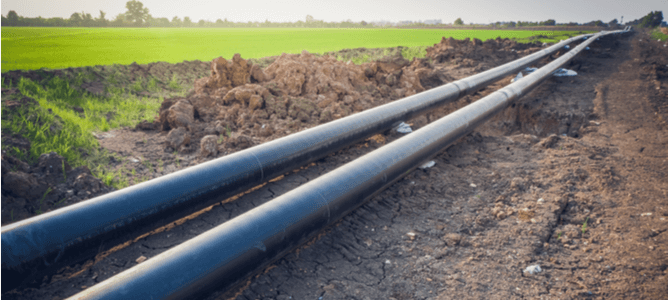
Pipeline Maintenance Planning: Steps for Safe Purging & Inerting
Pipeline maintenance planning often gets simplified into a checklist. But in practice, purging and inerting work only when the planning is thorough and the execution matches the design assumptions. This is true across oil and gas pipeline maintenance programs.
Why Purging and Inerting Exist in Pipeline Maintenance
Pipelines carry hydrocarbons, oxygen, moisture, and contaminants at different stages of their life cycle. During maintenance/commissioning, those contents become a risk.
In oil pipeline cleaning and maintenance, residual hydrocarbons mixed with air can create flammable ranges well inside LEL and UEL limits. In natural gas pipeline maintenance, oxygen ingress during shutdown can accelerate internal corrosion once service conditions change.
Purging removes an existing gas or vapor from the line. Inerting replaces reactive gases with an inert medium, most often nitrogen. These steps reduce combustion risk, limit oxidation and allow maintenance activities to proceed without live-product hazards.
Regulatory Drivers in Pipeline Maintenance
U.S. pipeline operators work under oversight from agencies such as the EPA and the Department of Transportation, which place responsibility on operators to prevent releases during maintenance activities. Pipeline inspection and maintenance programs are expected to control oxygen ingress, residual hydrocarbons and uncontrolled venting that could lead to spills or atmospheric discharge.
Purging and inerting procedures support these expectations by managing internal pipeline conditions during shutdowns, repairs, and recommissioning. Poor execution often shows up during audits through incomplete records, unstable gas readings, or inconsistent restart conditions, and may not surface until the line returns to service.
Pipeline Section Planning
Before any gas moves, the physical limits of the work need to be clear. The following are typical inputs:
- Internal diameter and wall thickness
- Total length and elevation changes
- Valve locations and known leak paths
- Dead legs, low points, branch connections
Volume calculations are normally done in standard cubic feet. Field crews often underestimate volume when elevation changes trap gas pockets. That mistake shows up later as unstable oxygen readings or slow displacement rates.
What Criteria Are Used to Select the Purge Medium?
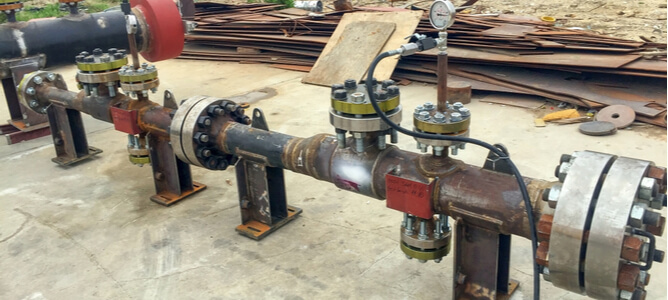
For most oil and gas pipeline maintenance work, nitrogen is used. Its inert behavior and availability make it suitable for both purging and inerting.
Compressed air may be used during early displacement stages on non-hydrocarbon systems, but it introduces oxygen and moisture. That combination is rarely acceptable once hydrocarbons have been present.
Nitrogen purity targets vary by application. Many maintenance plans aim for oxygen concentrations below 2% by volume. Some specifications call for less than 1%, especially on dry gas systems or lines with corrosion history.
Different Gas Displacement Techniques
Slug purging uses an interface between the displaced gas and nitrogen. This method requires controlled velocities to avoid mixing. Typical line velocities fall between 3 and 10 ft/s depending on diameter and surface roughness.
Dilution purging relies on repeated volume exchanges. This approach takes more nitrogen but tolerates complex geometries. It is often used when pigging is not an option.
In oil pipeline maintenance scenarios with heavy residuals, pig-assisted purging is sometimes combined with nitrogen flow to remove liquids before inerting begins.
How Do Operators Control Flow Rate and Pressure?
Flow rate matters more than pressure alone. Excessive velocity causes turbulent mixing, which raises nitrogen consumption and delays acceptable oxygen readings. Pressure can be limited by:
- MAOP of the line section
- Temporary blinds and test caps
- Downstream venting hardware
Operators often track differential pressure across the section rather than inlet pressure only. Sudden drops usually indicate an unplanned vent/valve bypass.
How Are Gas Conditions Monitored During Purging?
Oxygen analyzers are placed at vent points and sometimes mid-line sampling ports. Readings should stabilize before declaring the line inert.
A common field mistake is trusting a single analyzer location. Stratification can leave higher oxygen content at low points or branch lines. In natural gas pipeline maintenance, this shows up during restart when oxygen spikes appear at metering stations.
Moisture monitoring may also be required. Dew points below -40°F are often specified after hydrotest drying or extended shutdowns.
Safety Controls During Purging
Even inert gas operations carry risk.
Nitrogen displaces oxygen and creates asphyxiation hazards. Work zones require continuous atmospheric monitoring and controlled access. Vent stacks should be positioned to avoid low lying areas where gas can accumulate.
Noise during venting can exceed 120 dBA on larger diameters. Temporary silencers/diffusers are often used to stay within site limits.
How is the Pipeline Returned to Service?
Once maintenance is complete, the inert atmosphere must be displaced again. This step is planned with the same care as initial purging.
Hydrocarbon introduction rates are controlled to prevent static buildup and pressure shock. In oil and gas pipeline maintenance, this phase is where documentation gaps tend to surface (especially if earlier oxygen readings were incomplete).
Explore Pipeline Maintenance Services from NiGen
NiGen supports pipeline maintenance planning and execution for oil and gas operators across North America. Services include nitrogen purging, inerting, drying and controlled displacement for oil pipeline maintenance and natural gas pipeline maintenance projects.
Our systems are designed for field conditions, with on site nitrogen generation, pressure testing, flow control, monitoring, and experienced technicians who understand how these operations behave outside of drawings.
For years, NiGen has provided pipeline services that align with operational constraints and pipeline safety requirements. Contact NiGen to discuss your pipeline maintenance needs today.