

Types of Compressed Air Dryers (How to Choose the Right One)
Different types of compressed air dryers are used across manufacturing, chemical processing, pharmaceuticals, oil and gas, and food production. They are a standard part of any air compressor dryer setup. In these environments, moisture in compressed air causes corrosion, frozen lines, product contamination, and instrument failure.
Most systems do not fail because they lack a dryer. They fail because the wrong type was selected or it was not sized correctly.
What is A Compressed Air Dryer?
A compressed air dryer removes water vapor from pressurized air before it reaches downstream equipment. When air is compressed, the concentration of moisture increases. As the air cools in piping, that moisture condenses into liquid water.
That is where problems start:
- Rust and scale inside piping
- Sticking valves and actuators
- Freezing in outdoor lines
- Poor product quality in sensitive processes
Dryers are used to lower the dew point so condensation does not occur inside the system. This is why every air dryer for compressor applications is selected based on required dew point. How does an air dryer work? Air dryers come in multiple configurations and operate in different ways.
Types of Compressed Air Dryers
The most commonly used air dryer system types are described below:
- Refrigerated air dryers
- Deliquescent air dryers
- Desiccant air dryers
- Chemical air dryers
- Membrane air dryers
Quick Comparison of Air Dryer Types
| Dryer Type | Typical Dew Point | Best Use Case | Main Limitation |
| Refrigerated | ~35–50°F | General plant air | Not dry enough for critical processes |
| Desiccant | -40°F to -100°F | Instrument air, food, pharma | Higher cost and complexity |
| Membrane | Varies | Point-of-use, remote systems | Limited capacity |
| Deliquescent | Ambient dependent | Remote / temporary | Ongoing media replacement |
| Chemical | Varies | Small or niche systems | Disposal and consumables |
It’s important to note that most facilities use refrigerated dryers for general air and desiccant dryer types where low dew points are required. Learn more in depth details below.
Refrigerated Air Dryers
Compressed air passes through a heat exchanger and is cooled. As temperature drops, water vapor condenses into liquid and is removed. The air is then reheated slightly before leaving the unit.
There are two main designs:
- Cycling dryers adjust cooling output based on demand and reduce energy use at part load
- Non-cycling dryers run continuously and maintain a steady dew point but use more energy
Where They Fit
Refrigerated air dryers are a popular choice for several manufacturing and service applications requiring compressed air with no detectable moisture. However, they are not suitable for highly sensitive applications where even little quantities of water can be detrimental.
Pros and Cons
Benefits of refrigerated air dryers include:
- Low setup costs
- Inexpensive to operate
- Resistant to airborne particle
Disadvantages include:
- Not ideal for operation at sub-zero temperatures
- Possess a marginal dew point capacity
Deliquescent Air Dryers
These types of air dryers possess an absorptive mechanism that helps remove moisture from the air that passes through them. In addition, deliquescent dryers use hygroscopic salt tablets that require replacement when saturated.
Where They Fit
Deliquescent dryers can be deployed effectively in hazardous, remote locations that require dry, pressurized air. Examples of applications that benefit from deliquescent dryer use include landfill sites and wood and asphalt manufacturing industries.
Pros and Cons
Key benefits of using deliquescent dryers include:
- Its ease of use in special conditions where contaminated air/waste gases are being handled
- Minimal maintenance requirements
- Does not require electricity to operate
Drawbacks of deliquescent air dryers are listed below:
- Hygroscopic drying material must be replaced regularly, leading to higher maintenance costs
- Dew point is variable depending on air temperature
Desiccant Air Dryers
Desiccant air dryers also use hygroscopic materials (silica gel, activated alumina) to achieve air drying. The absorption setup typically comprises a twin tower drying system with both chambers filled with desiccant materials.
During operation, one tower is actively drying air channeled through it while the second is in a regenerative state (desiccant saturated with moisture is being renewed for further use). Both towers switch back and forth between drying and regenerative phases throughout the operation cycles.
Where They Fit
These types of compressed air dryers are advantageous in moisture-sensitive industrial and commercial applications, including:
- Mold prevention
- Healthcare/medication prescription environments
- Food processing
- Fabric manufacturing
- Ice rinks
Pros and Cons
Benefits of desiccant dryers include:
- Very low dew points (-40°F to -100°F)
- Moderate operating costs
- Suitable for use in harsh, isolated environments
Disadvantages of desiccant dryer use include:
- Higher set up costs
- Air filtration needed to prevent desiccant degradation from suspended oils
- Purge air is often required
Chemical Air Dryers
These dryers utilize hygroscopic materials to achieve moisture removal from pressurized air. A typical setup is a drying unit that contains calcium chloride or lithium bead that pulls moisture out of the air stream passing through it. In addition, high-quality coalescing and particulate filters are often integrated to prolong the lifespan of the drying material.
Where They Fit
Chemical dryers are a good choice for integrating moisture-sensitive chemical manufacturing and food processing applications.
Pros and Cons
Advantages of chemical air dryers include:
- Inexpensive setup/ongoing costs
- Minimal maintenance as there are no moving parts
- Require little monitoring
Disadvantages include:
- Chemical replacement cost
- Disposal requirements
- Needs clean air to operate effectively
Membrane Air Dryers
Membrane dryers are an efficient option for compressed air drying. Compressed air flows through microtubes. Water vapor diffuses through the membrane walls while dry air continues downstream.
Where They Fit
Membrane dryers are used in applications requiring dehumidification, food processing, and gas separation.
Pros and Cons
The benefits of using these types of air dryers include:
- Remote operation without the need for electricity
- Quiet operation, no moving parts
- Easy maintenance
Drawbacks of membrane air drying systems include:
- Requires very clean air
- Limited flow capacity
Refrigerated vs. Desiccant Air Dryer Types
This is the most common comparison when selecting an air dryer for a compressed air drying system.
When to use each:
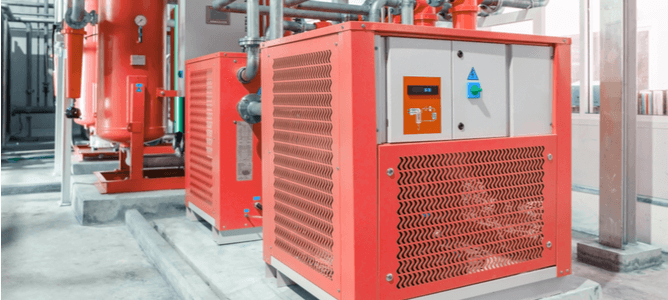
- Refrigerated dryers are used for general plant air where some moisture tolerance is acceptable
- Desiccant dryers are used for critical applications where moisture cannot be present
Dew point difference:
- Refrigerated: typically 35–50°F
- Desiccant: typically -40°F to -100°F
Cost difference:
- Refrigerated dryers have lower upfront and operating costs
- Desiccant dryers cost more due to equipment, filtration, and regeneration requirements
In most systems, the decision is simple. If moisture can be tolerated, use refrigerated. If it cannot, use desiccant.
Learn more: Desiccant Air Dryer vs. Refrigerated
Explore NiGen’s Line of Compressed Air Dryers
At NiGen, we offer the efficient moisture elimination solutions guaranteed to optimize your industrial processes. We have various types of air dryers and industrial air treatment systems available for purchase and rent, such as industrial air filtration systems, air compressor aftercoolers, and industrial air compressors.
To learn more about our different types of air dryers for compressors, please contact us online now.